
We have a problem with beliefs
I’ve been thinking a lot lately about how we humans tend to evade the work necessary to make a decision about what we believe– to arrive at truth. But shouldn’t we be more interested in what is actually true than what is easy or fun to believe?
Don’t get me wrong, this doesn’t eliminate the fun by any means. I’m learning that the exercise of discovering reality is tremendously more interesting than taking the fastest, least-friction seat on any topic.
As I’m getting older, I’m growing increasingly concerned with the danger in willful neglect of observability.
We often choose to heavily color our beliefs by what we wish were true or by what seems easiest to believe rather than our beliefs following the natural conclusions drawn from actual evidence and observation. And really, that’s pretty problematic because if you’re capable of believing something without observing, then you’re capable of believing anything, regardless of strong evidence to the contrary.
This whole thought frame started landing on paper a couple of weeks ago when I was watching a Johnny Harris video on YouTube. If you haven’t checked out his stuff, I highly recommend it. You’ll be entertained immensely, but you’ll also learn an incredible amount on any given topic.
So I was watching Johnny’s video about the Bermuda Triangle. The “truth-seeking/veering off course” tangent happens right after he dunks on the crystals/Atlantis angle and quickly realizes how seductive the story still is. He catches himself again doing the same thing with “sciency” speculation later in the video.
“People love this stuff. Mysterious stories and finding connections in observations that we can see and understand. I know that at least for me, no matter how data minded and objective I am, I kind of get intoxicated by a good mysterious story. Our brains are like built for this stuff.”
This resonated with me. When Johnny talked about how we as humans love a mysterious story, I started thinking about the many pathways by which I tend to solidify my beliefs, often without the need of being rooted in actual facts. Here are the pathways I tend to default to, and they’re all… wrong.
Elitism
Like Johnny pointed out, mystery and wonder are powerful ingredients when it comes to beliefs. I think it’s why people get sucked into conspiracy theories so easily. Not that I deny all the theories – some of them have copious evidence worthy of a longer look – but I do think some outlandish theories get legs because of the wonder and marvel of story – we all love them!
But I’ve noticed a powerful add-on that heavily affects how tempting it can be to quickly embrace a belief without evidence or adequate thought-work. When any narrative is combined with the notion that adopting a new belief puts you in an elite category of thinkers – that’s when things get really interesting. I’ve experienced this with certain theological views throughout my Christian faith. At the risk of falling into a rabbit hole here, any student of biblical theology is probably aware of the term “young, restless, and reformed.” I’m not making the claim (at least not in this post) that reformed theology is right or wrong. But I do want to acknowledge the fact that many a young man has embraced its five points due to a perceived elite status for reformed believers.
Just go look up “flat earth conference” on YouTube. It’s captivating to watch convinced flat-earthers fervently make their case with certitude against genuine scientific thinkers. And the thing that seems to perpetuate their line of thinking the most is their sense of belonging to a class of superior minds. They feel like they are elite. What a fascinating trap elitism is! Powerful enough to spawn entire cults that vehemently deny mainstream scientific knowledge to the death.
It’s an astonishing, concerning, and, admittedly, entertaining thing to behold.
Inexpensive mental load
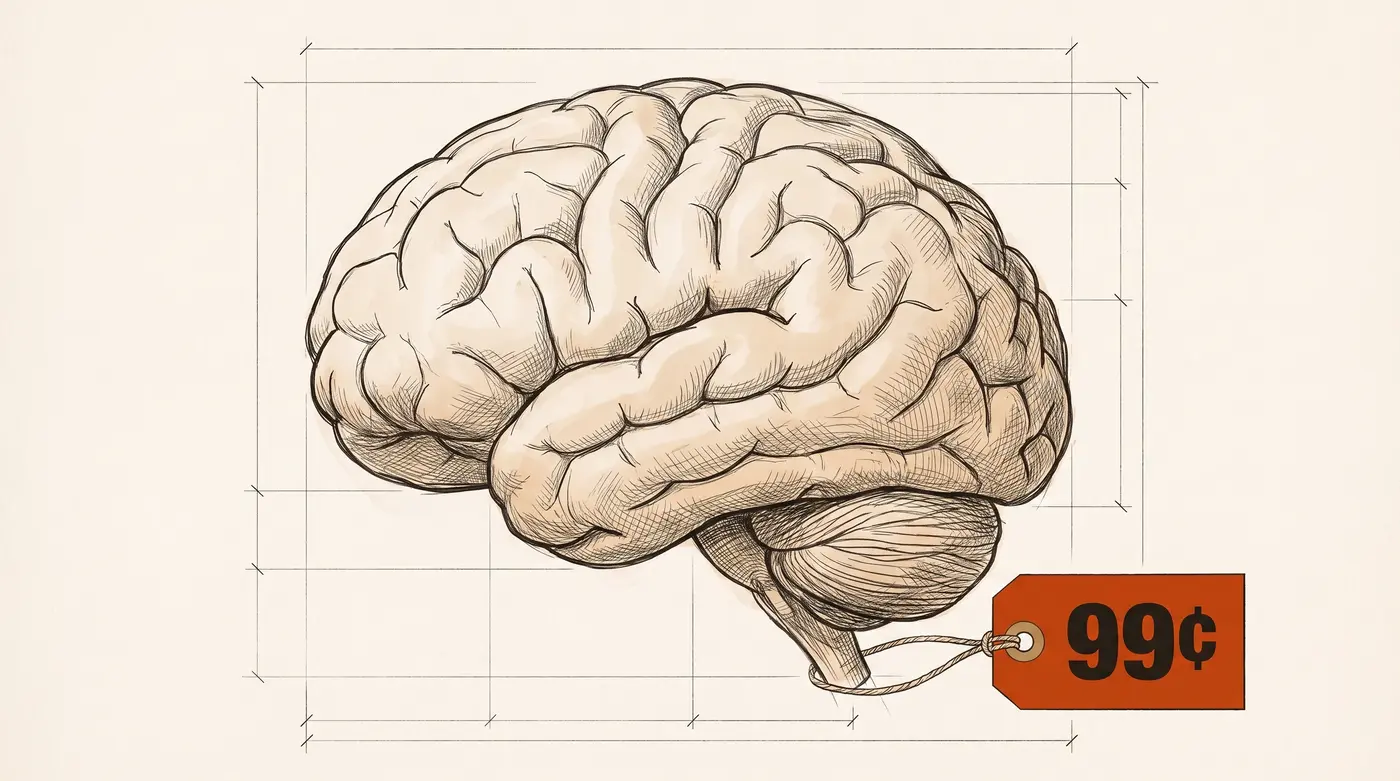
We love things to just make complete sense all the time. And the more “sense” we can make of things for the least amount of think-effort, the better. If we can package our thinking up in a nice tidy box that fits perfectly on our mental shelf, we’re more likely to formulate a belief that we’ll stick with for the rest of our lives.
This is a bad thing. A cheaply formed belief is one you can’t really defend with any real conviction because you’re not able to fully articulate why you believe it.
Everyone knows at least one person who limits their scope of truth by way of inexpensive mental loads. They always latch onto what they think is logical because it’s the easiest conclusion and requires the least amount of effort. If they have to read too much, ask many questions, do much searching– they’re going to default to the least effort conclusion and skip the think work. I’ve been guilty of that.
The real problem with this faulty decision matrix is that you think you’re doing good think-work, when in reality you’re doing no think work. You’re teaching your brain to not think, reason, or observe.
Narrative Drift
Videos have a unique ability to discourage evidence-based thinking in favor of a predetermined narrative because of the visual storytelling style with which they deliver. When music and visuals are strategically layered in, a video can make your brain think the narrative must be real. A good storyteller knows that a believable narrative has to be logical, orderly, and clearly connected and consistent. The more coherent the story feels, the more we start treating coherence as evidence. Again – we tend to think that if it just makes sense without any work involved, it has to be true.
Authority-language drift
I’ve learned to give pause on embracing any idea that can only be explained with advanced jargon. That kind of rhetoric sounds like rigor, so the hearer tends to accept it without any actual proof. I think this is only effective when the hearer doubts themselves intellectually. If people start talking just a little over our heads, they must know more than us, right?
I’m working on building a STOP habit at that intersection. Rather than blindly believing what I’m hearing just because it’s over my head, I need to do the work of getting to the necessary level of understanding represented in their lofty explanations. I’ve come to this conclusion– there’s no shame in saying “hey, can you hold on one second? I need you to break that down for me in smaller chunks.” If they can break it down like I’m asking, perhaps I can hook up with it. If they are unwilling or unable, that might be a sure sign I should call the narrative out for the rubbish that it is.
Motivated drift
When we hear something being explained – especially when it’s something truly fascinating – I think we want to gravitate toward mysterious conclusions and meaningful a-ha experiences. This can lead us to unconsciously steering toward those sorts of conclusions.
But the practice of forced thinking has led me to a more rewarding conclusion: Almost every time we discover what is actually true, there’s tremendous wonder and meaning in both the pursuit and the conclusion of that truth, and we free ourselves from the need of counterfeit mystery.
Conclusion
I used to think it was a sign of strength to decide what is true quickly and without hesitation. This led to years of accumulated limiting beliefs – and even worse – a repeatable decision matrix that fed on itself. Without critical thought and the ability to observe evidence, you can be convinced of almost anything. You can dream up the wildest imaginable explanation for any topic. I really don’t want to do that anymore – and I hope you don’t either.
Author

My name is Joe, and I run an IT and Cybersecurity company. Off the clock I’m a pianist, an avid reader, a student, a husband, and a dad. I write to think out loud — mostly about technology, history, art, and faith, and the places they all keep bumping into each other.